1
Key Concepts
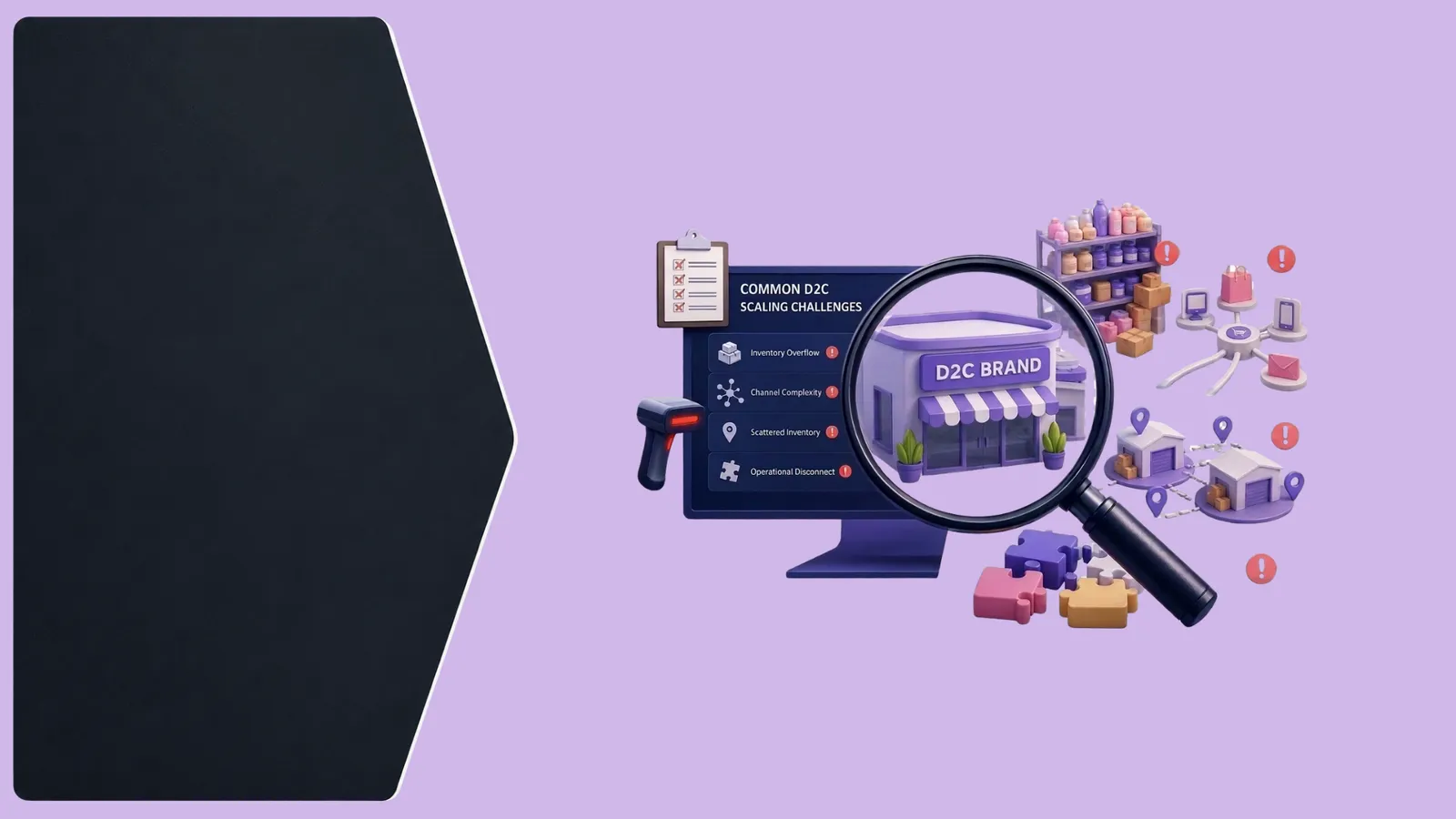
The three most common scaling challenges: inventory visibility breaking down (system counts drifting from physical reality as SKU count and order volume grow), fulfillment consistency slipping (the same order type handled differently depending on who's working that day), and customer service response time growing faster than the team, as more orders mean more support tickets without a proportional increase in support capacity. Each of these is manageable at low volume and becomes a real problem specifically during rapid growth phases.
2
Best Practices
Reconcile system inventory against physical counts on a fixed schedule, not just when a discrepancy is noticed. Document fulfillment steps so they're followed consistently regardless of who's executing them, rather than relying on tribal knowledge. Set up self-service or automated responses for the most common support questions (order status, return policy) so ticket volume doesn't scale linearly with order volume.
3
Implementation
Identify which of these three challenges is hitting hardest right now — most brands feel one more acutely than the others at any given growth stage. Addressing inventory visibility usually has the fastest payoff, since it prevents the customer-facing problems (overselling, wrong stock shown) that create support tickets and fulfillment errors downstream.
Pro Tip
These three challenges tend to hit in a predictable order as you scale — inventory visibility first, then fulfillment consistency, then support capacity. Knowing which one is next lets you get ahead of it instead of reacting to it.
Key Takeaways
- Inventory visibility, fulfillment consistency, and support capacity are the three most common scaling challenges
- Reconcile inventory on a fixed schedule, not reactively
- Document fulfillment steps so they're consistent regardless of who executes them
- Automate responses to common support questions before ticket volume outpaces team capacity
- These challenges tend to hit in a predictable sequence as a brand scales