1
GST Challenges for Marketplace Sellers
Marketplace sellers must reconcile GST on every transaction including TCS (Tax Collected at Source), TDS deductions, interstate vs intrastate supplies, and credit notes for returns. Each marketplace reports differently, creating compliance complexity.
2
TCS and Invoice Matching
Amazon, Flipkart, and other marketplaces deduct TCS and issue tax invoices. Your GST reconciliation must match marketplace tax reports with your GSTR-1 filings and ensure credit notes for returns are properly accounted.
3
GST Reconciliation with EliteOMS
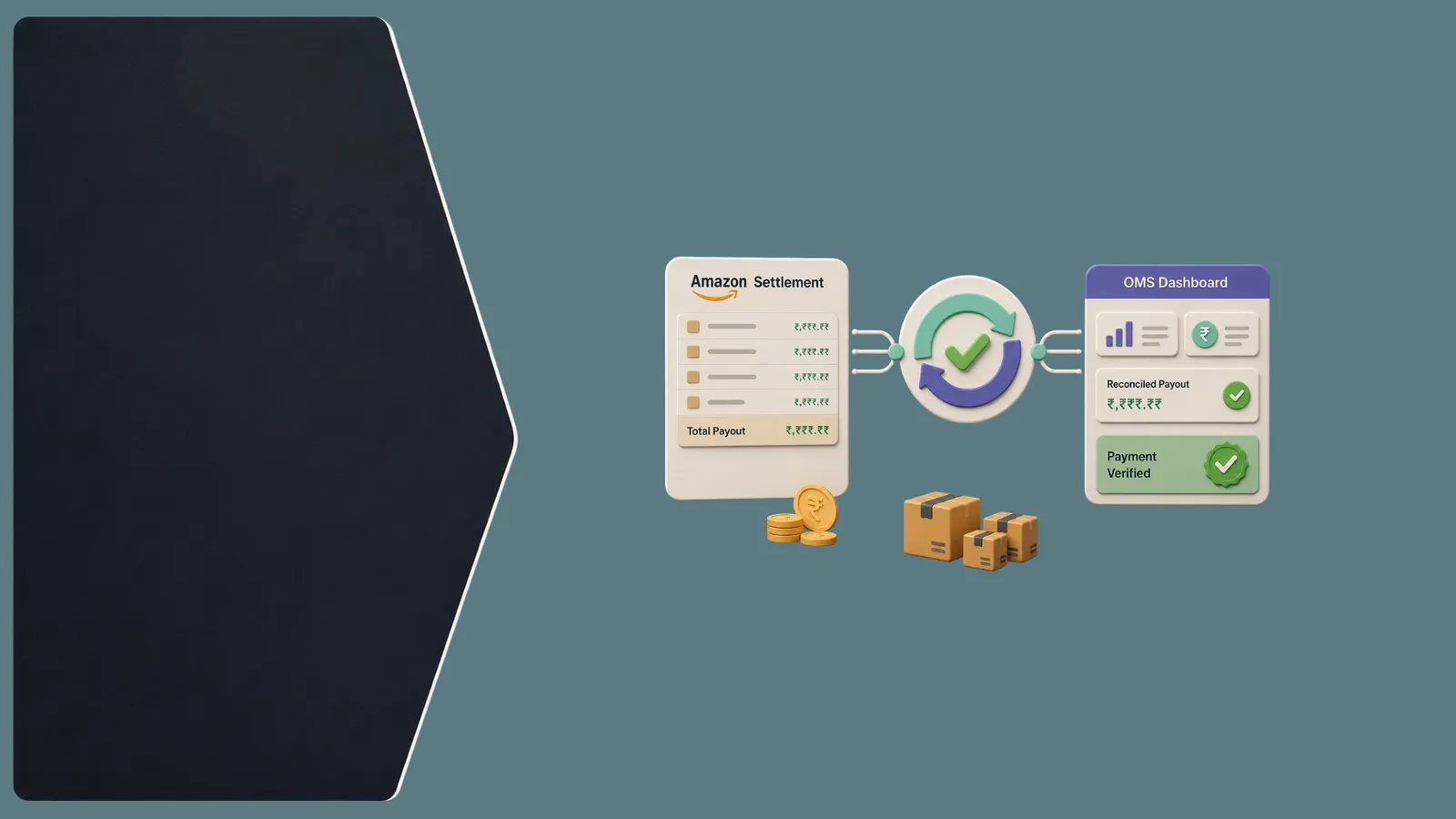
EliteOMS generates reconciliation reports aligned with marketplace tax data, helping finance teams validate TCS credits, match invoices to orders, and prepare accurate GST filings without manual data extraction.
Pro Tip
Reconcile GST monthly but validate TCS credits quarterly — mismatches compound quickly across multiple marketplaces.

Key Takeaways
- Track TCS separately for each marketplace
- Match credit notes to return reconciliation data
- Automate invoice generation from OMS order data
- Validate interstate vs intrastate tax treatment
- Use OMS reports for GSTR-1 preparation