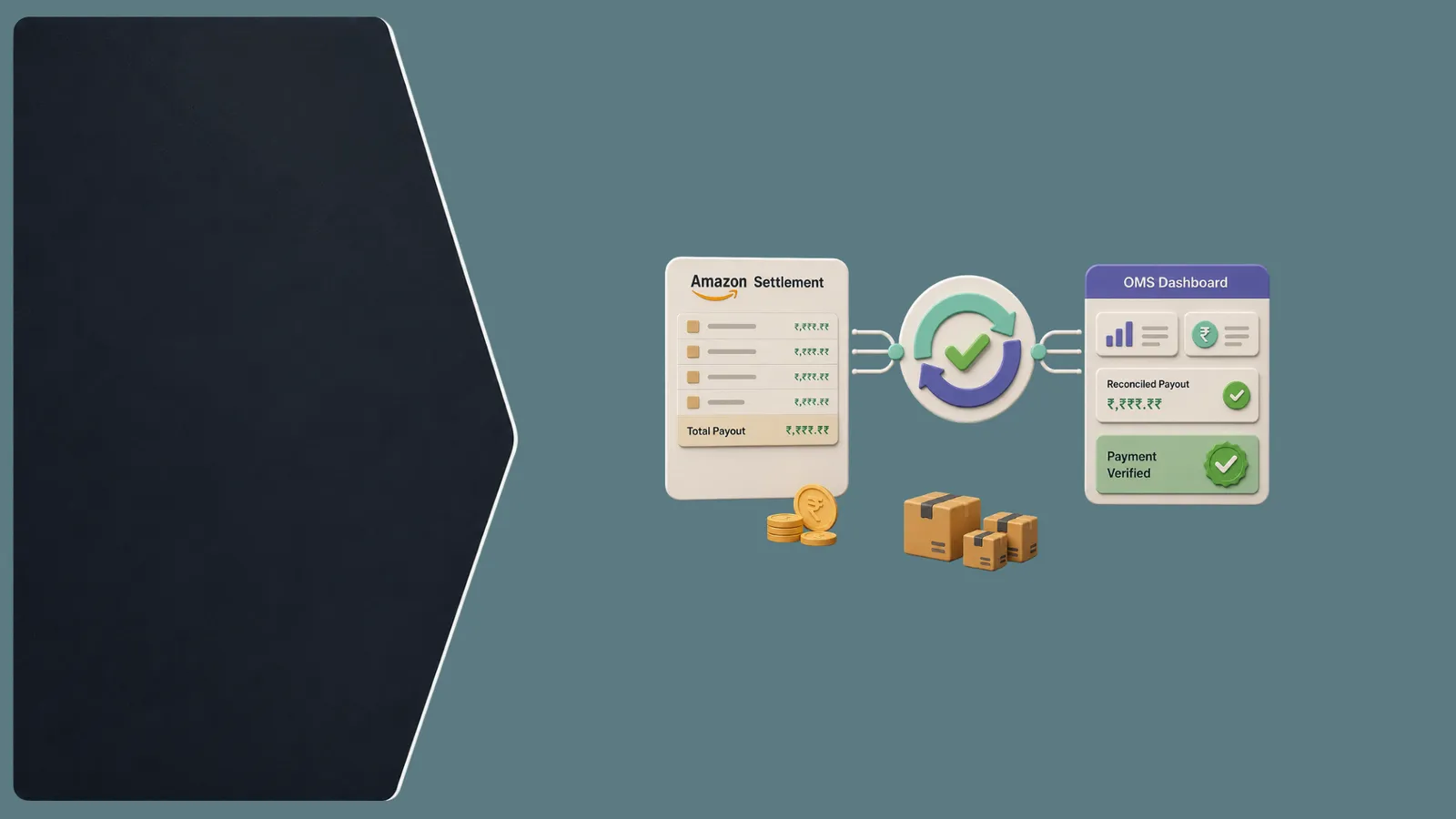
Introduction: Meesho Payout Reconciliation
Meesho payout reconciliation is the process of comparing Meesho order, payout, fee, return, and adjustment information with your own order and financial records. It helps sellers identify mismatches, understand deductions, track pending transactions, and maintain accurate financial records.
The payout details available can depend on the seller, transaction, policy, and current Meesho terms. Reconciliation should therefore start with the records for the relevant account and transaction, rather than assuming every order follows the same settlement pattern.
1. Understanding Meesho Payouts
Order activity, delivery status, applicable fees, shipping-related adjustments, returns or refunds, and other adjustments can all be relevant when reviewing a Meesho settlement. Payout information gives sellers a record of payment activity that can be compared with internal order and financial records.
The exact payment and fee structure can vary by seller, transaction, policy, and current terms. Check the information available for the specific transaction and account. A payout amount should be understood from its component records rather than treated as a universal calculation.
2. What Sellers Should Reconcile
Review order value, payout amount, applicable fees, shipping-related charges or adjustments, returns, refunds, other deductions or adjustments, and payment status. Which components apply may differ between transactions.
Compare individual transactions instead of relying only on the total payout. A total can hide unmatched orders or offsetting items. Matching at transaction level helps show how order activity and payment records relate and which amounts still need investigation.
3. Meesho Payout Reconciliation Process
- Collect data: Gather Meesho order and payout information for the period under review.
- Match records: Connect payout transactions with relevant orders using identifiers available in the records.
- Compare amounts: Review expected and actual amounts for each matched transaction.
- Review charges: Check applicable fees, shipping-related items, and other adjustments.
- Match returns: Link return and refund transactions to the original order where possible.
- List open items: Identify pending or unmatched transactions.
- Investigate differences: Check transaction details and timing before treating a difference as an error.
- Record resolution: Note the outcome and keep the supporting records for future reference.
4. Tracking Pending and Unmatched Payouts
Distinguish between an order that has not yet reached its expected payout stage, a transaction that appears paid but does not match internal records, and a genuine payment discrepancy. These situations require different follow-up.
Track transaction status and relevant settlement timing using the payout information for the account. A pending transaction is not automatically an error, and a mismatch should be checked against source records before it is classified as a discrepancy. Avoid applying an arbitrary number of days as a universal overdue threshold.
5. Common Meesho Payout Reconciliation Issues
Sellers may find payout mismatches, unexpected deductions, fee differences, return or refund mismatches, missing or unmatched transactions, adjustments, duplicate records, or differences between order value and net payout. Timing differences can also affect how orders and payment information appear across records.
A timing difference does not by itself indicate an error. Check the applicable payout information and transaction status, then document what remains unresolved. Keeping a clear list of open items helps the team distinguish pending activity from a confirmed discrepancy.
6. Manual vs Automated Meesho Reconciliation
Manual reconciliation often involves exporting data, maintaining spreadsheets, matching transactions, checking fees, tracking returns, and investigating discrepancies. It depends on accurate identifiers, careful spreadsheet handling, and consistent records of what has been reviewed.
An automated approach may centralize transaction data, match orders and payment records using configured rules, flag exceptions, and track reconciliation status. This can reduce repetitive manual work and make open items easier to review. Automation does not eliminate every error; source data, matching rules, and exceptions still require oversight.
7. Meesho Return and Payment Reconciliation
Payment reconciliation and return reconciliation are connected because a return can affect both the order record and payment information. Follow the lifecycle from original order and delivery to return request, refund or adjustment, and any payout impact shown in the relevant records.
Match a return to its original order and track unresolved amounts or statuses. Do not assume that a return always affects the same settlement cycle as the original order. Review the transaction information available for that seller account and record the outcome.
8. Meesho Reconciliation for Multichannel Sellers
Sellers operating on Meesho alongside Amazon, Flipkart, Myntra, AJIO, Shopify, and other channels need processes for orders, payments, returns, inventory, fulfillment, reconciliation, and reporting. Each marketplace may use different payment and settlement structures, so do not apply one channel's assumptions to another.
Consistent identifiers and a centralized operational view can help teams see what has been matched and which transactions remain open while preserving channel-specific details. Document each platform's workflow and keep source records available for review.
9. How Elitesecom Supports Payment Reconciliation
Elitesecom supports multichannel order management, payment reconciliation, return reconciliation, inventory synchronization, order processing, fulfillment operations, reporting, and operational visibility. Its 250+ integrations and Universal API support connections across ecommerce operations, subject to the systems and requirements involved.
These capabilities can help centralize ecommerce order and reconciliation operations. Confirm the integrations and data flows for your setup; this article does not claim specific Meesho payout automation, dispute filing, or guaranteed discrepancy detection.
Pro Tip
Reconcile Meesho payouts regularly and investigate transaction-level exceptions instead of relying only on the final payout amount. Keep the source records and resolution notes together.

Key Takeaways
- Match payout transactions with the relevant order records.
- Review applicable fees and adjustments separately.
- Track pending and unmatched transactions until their status is clear.
- Reconcile returns and refunds against their original orders.
- Account for payout timing differences before classifying a discrepancy.
- Maintain reconciliation records and an audit trail.
- Automate repetitive reconciliation work where appropriate and review exceptions.
- Use centralized reconciliation when selling across multiple channels.