1
Key Concepts
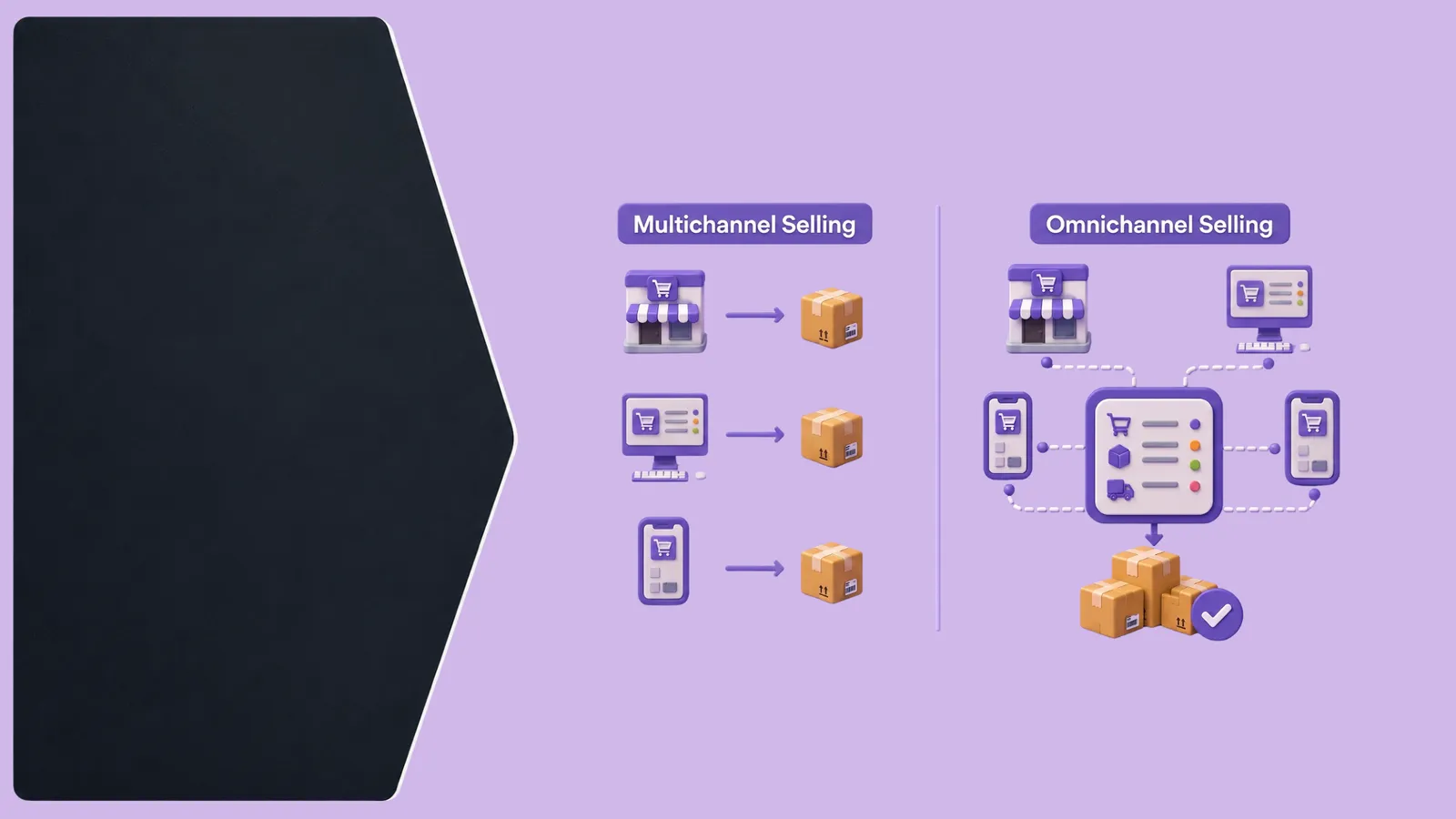
Multichannel selling treats each platform (Shopify, Amazon, Flipkart) as a separate operation with its own inventory count and order queue — simpler to start, but risk of overselling and fragmented data grows with each additional channel. Omnichannel selling connects every channel to one shared inventory and customer view, so a sale anywhere reflects everywhere instantly. Most brands start multichannel by necessity (adding platforms one at a time) and only become omnichannel once they connect those platforms through a unifying system.
2
Best Practices
If you're multichannel with 2 or fewer platforms and low order volume, the operational risk of separate systems may still be manageable manually. Past 2-3 channels or a few hundred monthly orders, the case for moving to a true omnichannel setup (shared inventory, unified order queue) grows quickly, since manual cross-checking no longer scales. Prioritize unifying inventory first — it's the highest-risk gap between multichannel and omnichannel operations.
3
Implementation
Assess how many channels you're currently selling on and whether your inventory counts across them are genuinely synced or just similar — many 'multichannel' sellers assume they're closer to omnichannel than they actually are. Moving to a real omnichannel setup means connecting every channel to one OMS that maintains a single, shared inventory and order view rather than separate counts per platform.
Pro Tip
The gap between multichannel and omnichannel isn't about how many platforms you sell on — it's about whether those platforms share one source of truth for inventory and orders.
Key Takeaways
- Multichannel means separate operations per platform; omnichannel means one connected system
- Manual multichannel management becomes risky past 2-3 channels or a few hundred monthly orders
- Unifying inventory is the highest-priority step toward true omnichannel operations
- Check whether your current setup is genuinely synced or just superficially similar across platforms
- One OMS connecting every channel is what actually achieves omnichannel, not just adding more platforms