Introduction: OMS vs WMS
OMS vs WMS is a common question for ecommerce businesses because both systems touch inventory and fulfillment. An Order Management System (OMS) manages and coordinates the broader order lifecycle across channels. A Warehouse Management System (WMS) focuses on the physical work of receiving and fulfilling stock inside a warehouse.
They are related and complementary systems, but they solve different operational problems and are not automatically interchangeable. The right setup depends on sales channels, order volume, warehouse complexity, inventory needs, fulfillment processes, and integrations. Some businesses need stronger order coordination first; others need detailed control of warehouse execution, and some use both.
What Is a Warehouse Management System (WMS)?
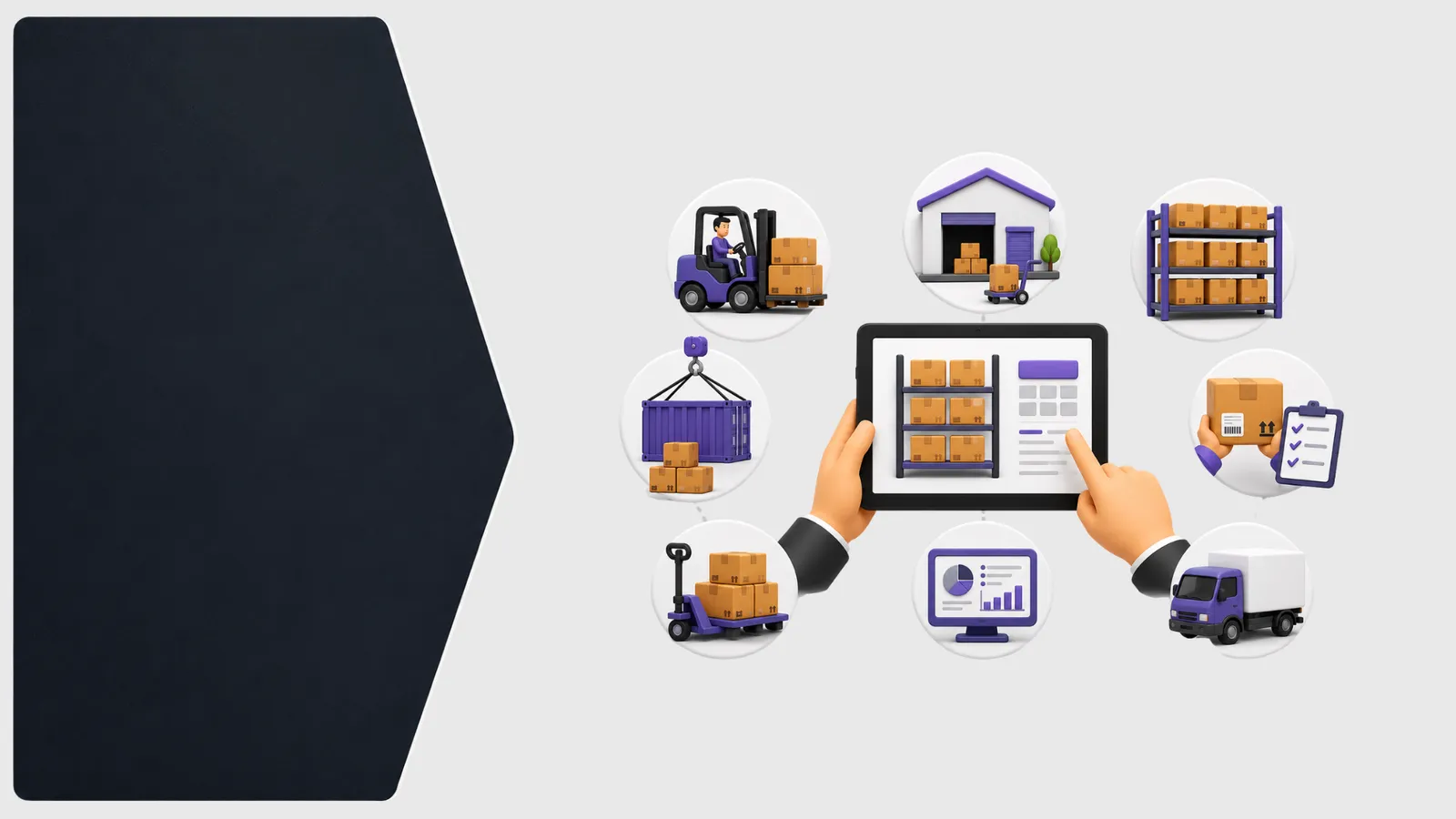
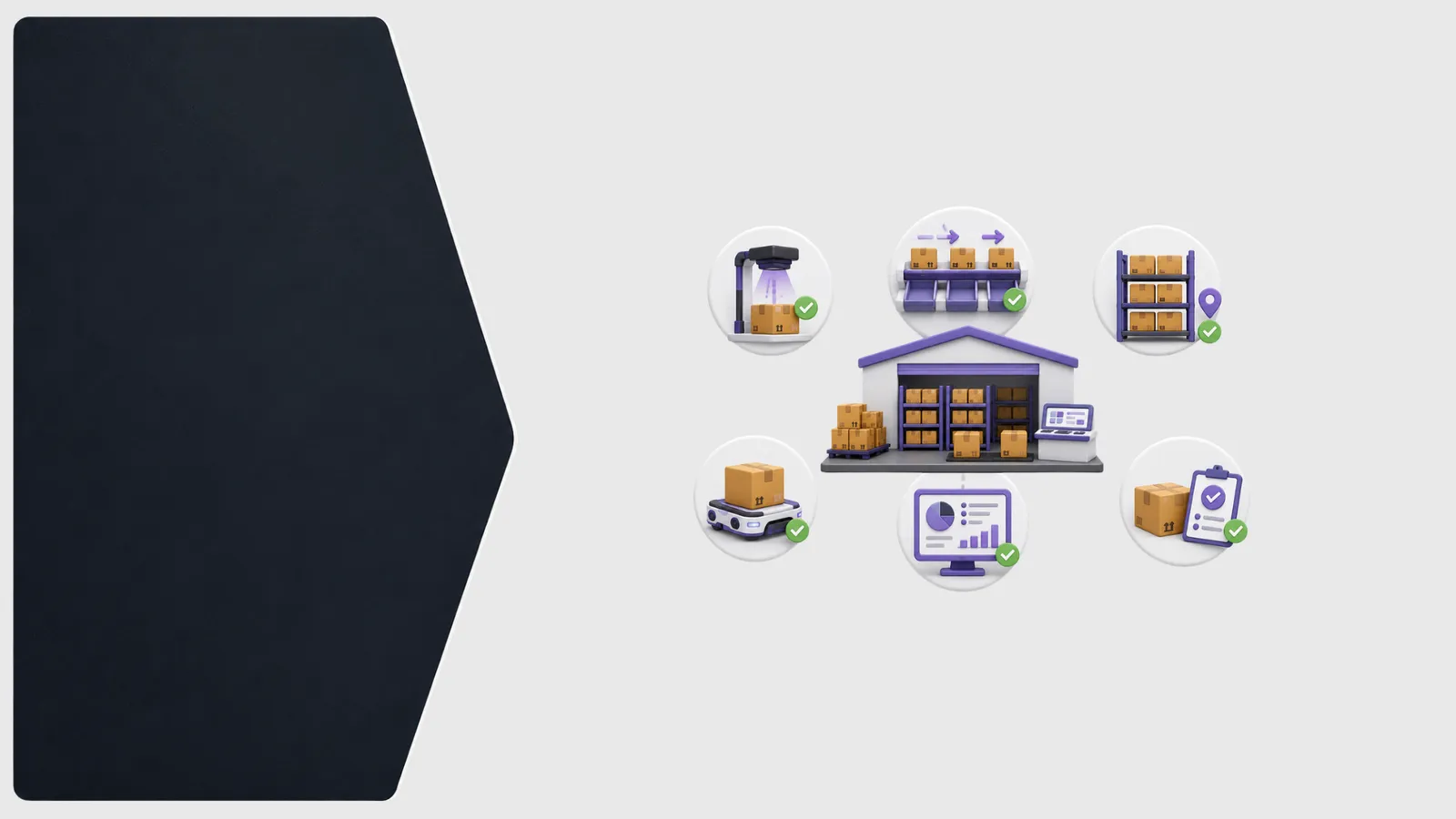
A warehouse management system for ecommerce helps teams coordinate work that takes place in the warehouse. Depending on the software and setup, this can include receiving incoming products, recording and checking stock, putaway into storage, location management, inventory tracking, and stock movement between locations.
When an order needs fulfillment, a WMS may support picking items from storage, packing and labeling them, and preparing dispatch. Some systems also support warehouse-side returns handling, barcode or scanning workflows, and reporting that gives teams visibility into warehouse activity. Capabilities vary by product, so these should be evaluated against the actual workflow.
Warehouse management is the operational process: the people, rules, and steps used to handle goods. A Warehouse Management System (WMS) is software used to manage and coordinate those processes. Its primary focus is what happens inside the warehouse.
What Is an Order Management System (OMS)?
An order management system manages and coordinates the broader order lifecycle across ecommerce and marketplace channels. Depending on the platform, an ecommerce OMS can aggregate orders, provide multichannel order management, show inventory availability, synchronize inventory, and support order processing and routing.
It can also coordinate fulfillment, provide order status visibility, and connect order workflows with returns management, payment reconciliation, or return reconciliation. Integrations may connect an OMS with channels such as Amazon, Flipkart, Meesho, Myntra, AJIO, or Shopify, but availability and behavior depend on the integrations the OMS supports.
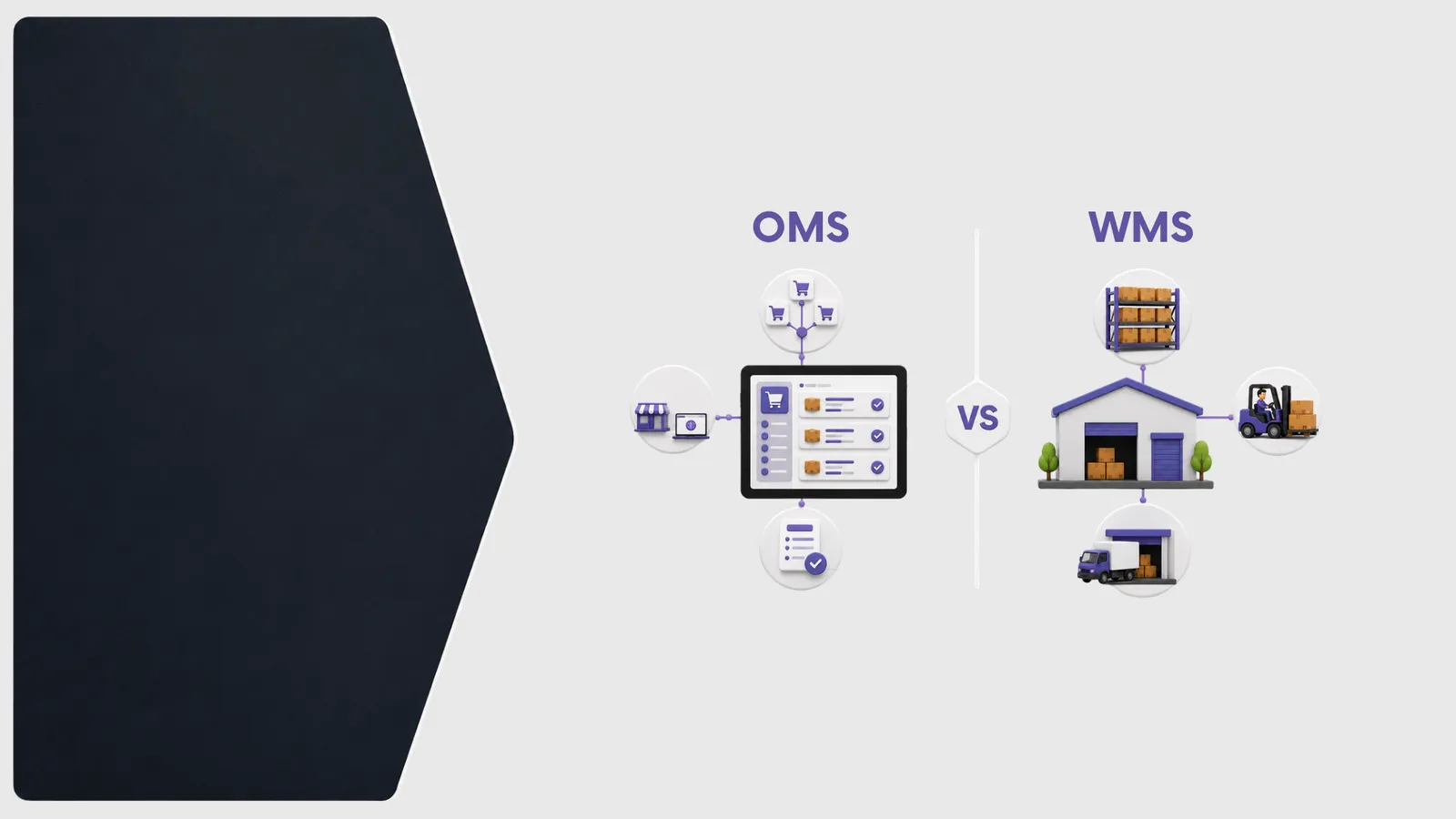
In short, the OMS sits at the broader ecommerce and order-operations layer. A WMS goes deeper into warehouse execution. Order management software can coordinate what needs to happen to an order, while warehouse management software supports how warehouse teams carry out their work.
OMS vs WMS: Key Differences
| Area | OMS | WMS |
|---|---|---|
| Primary purpose | Manage and coordinate orders | Manage warehouse operations |
| Main focus | Orders, channels, fulfillment, returns | Storage, stock movement, picking, packing |
| Sales channels | Multiple ecommerce and marketplace channels | Usually warehouse-focused |
| Order routing | Can coordinate fulfillment location decisions | Executes warehouse-level fulfillment work |
| Inventory | Cross-channel and location visibility | Detailed warehouse inventory management |
| Receiving and putaway | Usually limited or integration-dependent | Common core warehouse functions |
| Picking and packing | Coordinates fulfillment | Can manage picking and packing operations |
| Returns | Manages the order and return lifecycle | May support physical warehouse-side return handling |
| Reporting and users | Order/operations; ecommerce and operations teams | Warehouse operations; warehouse and fulfillment teams |
Capabilities vary by platform and implementation. Some systems overlap, and integrations between systems differ. Treat this comparison as a guide to their typical focus, not an absolute rule for every software product.
How OMS and WMS Work Together
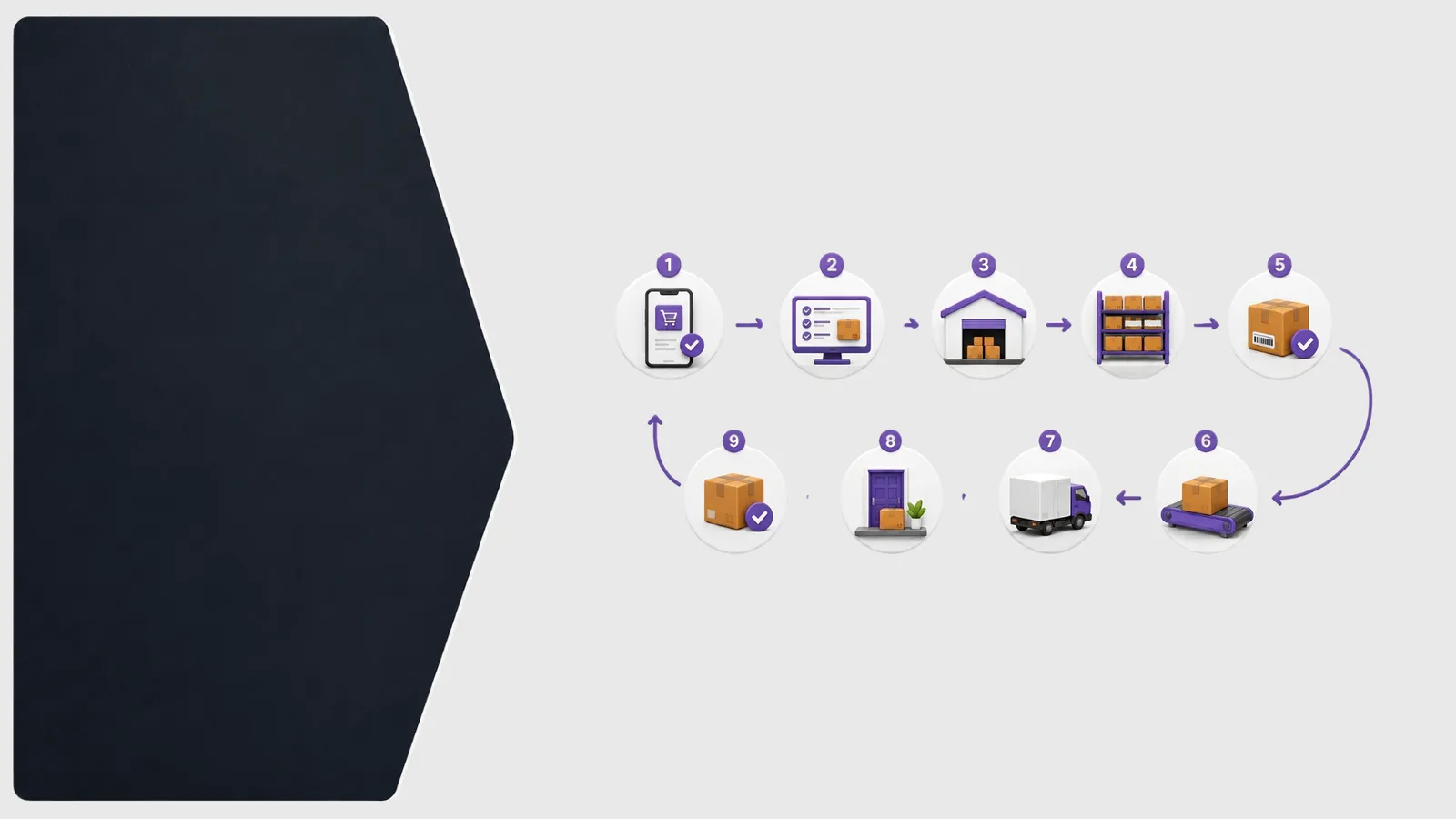
A connected workflow may look like this:
Order Received → OMS Processes Order → Inventory Checked → Fulfillment Location Selected → WMS Receives Warehouse Task → Picking → Packing → Dispatch → Fulfillment Status Updated
The OMS can aggregate and process the order, check available inventory, and coordinate where fulfillment should happen when the platform supports routing. The WMS receives the warehouse task and supports locating stock and carrying out picking, packing, and dispatch. When systems are integrated, the WMS can send warehouse fulfillment or status information back to the OMS.
The exact handoff depends on the system architecture and integrations. An OMS and WMS do not necessarily connect automatically, so businesses should confirm what data is exchanged and which system owns each step.
Do You Need an OMS, WMS, or Both?
An OMS may be more important when orders come from several channels, inventory needs synchronization across those channels, or the business needs centralized order processing, routing, fulfillment coordination, returns, and reconciliation visibility.
A WMS may be more important when receiving is complex, storage or bin locations need close control, stock movement must be tracked in detail, or picking and packing require deeper warehouse execution support.
Both may make sense when a multichannel business also operates complex or multiple warehouses, has significant SKU and inventory complexity, and needs both order orchestration and detailed warehouse execution. Not every ecommerce business needs both. Start with the operational bottleneck and the workflows your current tools cannot support.
OMS vs WMS for Multichannel Ecommerce
Consider a seller operating across Amazon, Flipkart, Meesho, Myntra, AJIO, or Shopify. When a customer places a marketplace order, an OMS may receive or aggregate it, check inventory availability, coordinate fulfillment, and manage order status across the broader lifecycle.
The WMS may then receive a warehouse task, help staff locate the inventory, and support picking, packing, and dispatch. It can provide warehouse-level fulfillment information back to the OMS when the systems are connected. The division of work helps explain why ecommerce order management and warehouse operations often need different tools, even when they share inventory data.
OMS, WMS, and Inventory Management
OMS focuses on the order lifecycle and coordination. WMS focuses on warehouse operations and physical inventory movement. Inventory management focuses on stock quantities, availability, locations, movements, allocation, and visibility.
These responsibilities can overlap across products, and systems can work together through integrations. One does not automatically replace the others: assess where inventory records are maintained, how changes are synchronized, and which system teams rely on for each operational decision.
How to Choose Between OMS and WMS
First identify the operational problem you need to solve. Then assess your number of sales channels and warehouses, SKU and order complexity, inventory requirements, marketplace and ecommerce integrations, order routing, fulfillment and returns workflows, reporting needs, scalability, existing software, and implementation requirements.
Map a real order from channel receipt through dispatch and any return. Note where data is duplicated, teams coordinate manually, or warehouse detail is missing. Confirm which system supports each needed step and how integrations behave. Choose the system based on the operational problem you need to solve, rather than choosing based only on the number of features.
How Elitesecom Fits Ecommerce Order Operations
Elitesecom supports ecommerce order operations with multichannel order management, ecommerce and marketplace integrations, inventory synchronization, order processing, fulfillment coordination, returns management, payment reconciliation, and return reconciliation. These capabilities support order and inventory workflows around fulfillment. Businesses with detailed warehouse execution requirements should assess those requirements separately and confirm how their warehouse tools connect.
Pro Tip
OMS and WMS are not competing systems. They solve different operational problems and can work together when an ecommerce business needs both order orchestration and detailed warehouse execution.
Key Takeaways
- An OMS manages and coordinates the broader order lifecycle across channels.
- A WMS manages detailed warehouse operations and physical inventory movement.
- OMS focuses on orders, channels, fulfillment coordination, and returns.
- WMS focuses on receiving, storage, picking, packing, and warehouse execution.
- An OMS can coordinate fulfillment location decisions depending on the platform.
- A WMS supports warehouse-level fulfillment activities.
- OMS and WMS can work together through integrations, depending on the systems.
- Multichannel businesses may benefit from an OMS; complex warehouse operations may also call for a WMS.
- Choose based on operational requirements, not a feature count alone.