1
Key Concepts
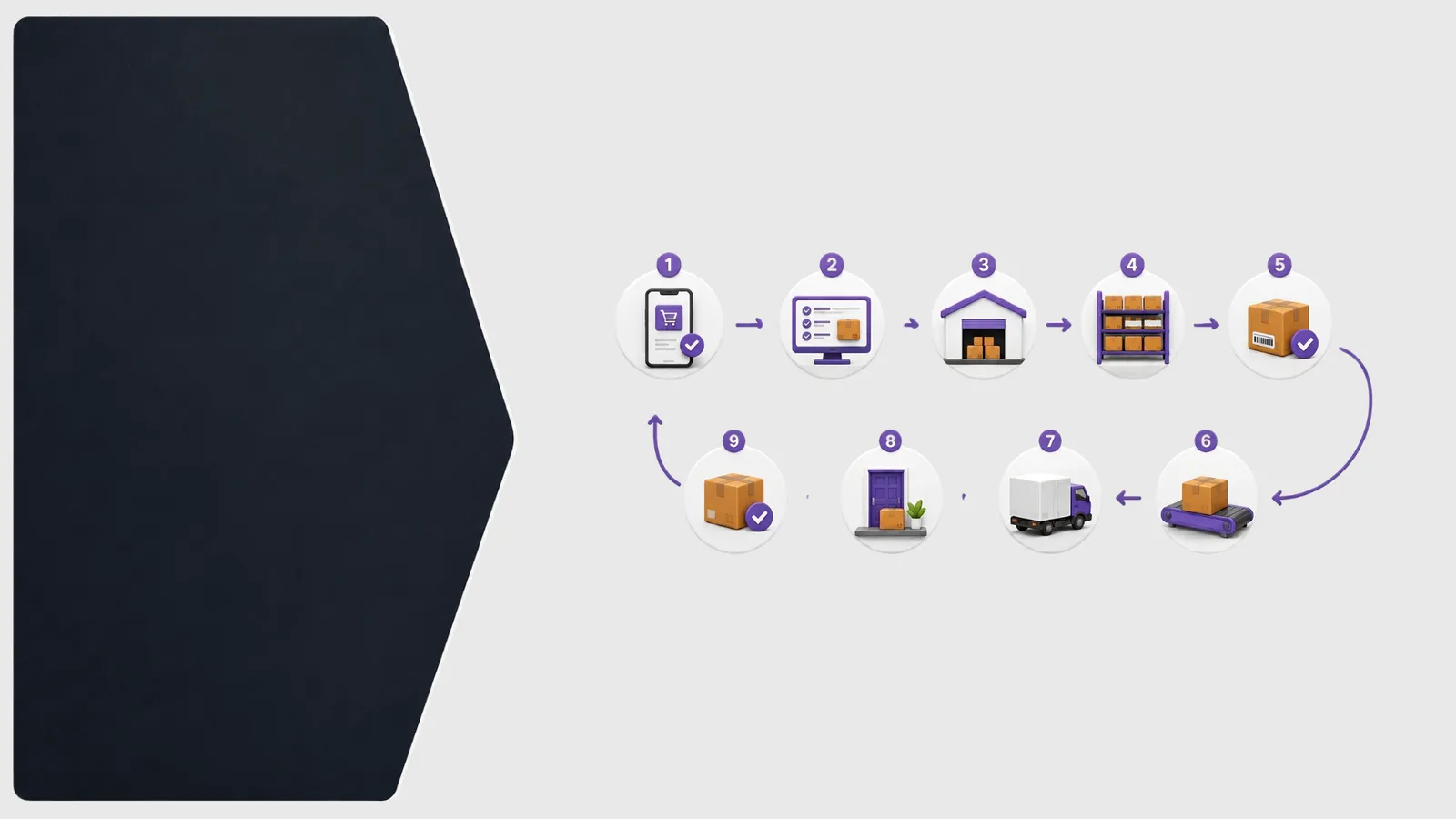
The five stages of order fulfillment: order receipt (the order enters your system from whichever channel it came from), inventory allocation (the system confirms and reserves stock for that order), picking (staff retrieves the item from its warehouse location), packing (the item is packaged and labeled), and shipping (handoff to the courier). Problems most often occur at the handoff between allocation and picking (allocated stock that's actually unavailable) and between packing and shipping (delays in courier pickup scheduling).
2
Best Practices
Confirm inventory allocation reflects real, physical stock — not just system-recorded stock — since a mismatch here causes an order to be accepted that can't actually be fulfilled. Batch picking by zone or by order similarity to reduce the time between allocation and physical retrieval. Schedule courier pickups proactively based on expected packing completion time, rather than waiting until packages are ready and then arranging pickup reactively.
3
Implementation
Map your own fulfillment process against these five stages and time how long each takes, plus how long the handoff between stages takes — handoff delays are often larger and more fixable than the actual work time within each stage. Address whichever handoff is slowest first, since that's usually where orders visibly stall.
Pro Tip
The time an order spends 'in between' stages — waiting to be picked after allocation, or waiting for courier pickup after packing — is often larger than the actual working time within any single stage, and it's usually the easiest place to find real speed improvements.
Key Takeaways
- Fulfillment breaks into five stages: receipt, allocation, picking, packing, shipping
- Most delays occur at handoffs between stages, not within a single stage
- Confirm allocated stock reflects physical reality, not just system records
- Batch picking by zone or order similarity to reduce retrieval time
- Schedule courier pickups proactively rather than reactively after packing completes