Introduction / Key Concepts
What Is an Order Management System for Ecommerce?
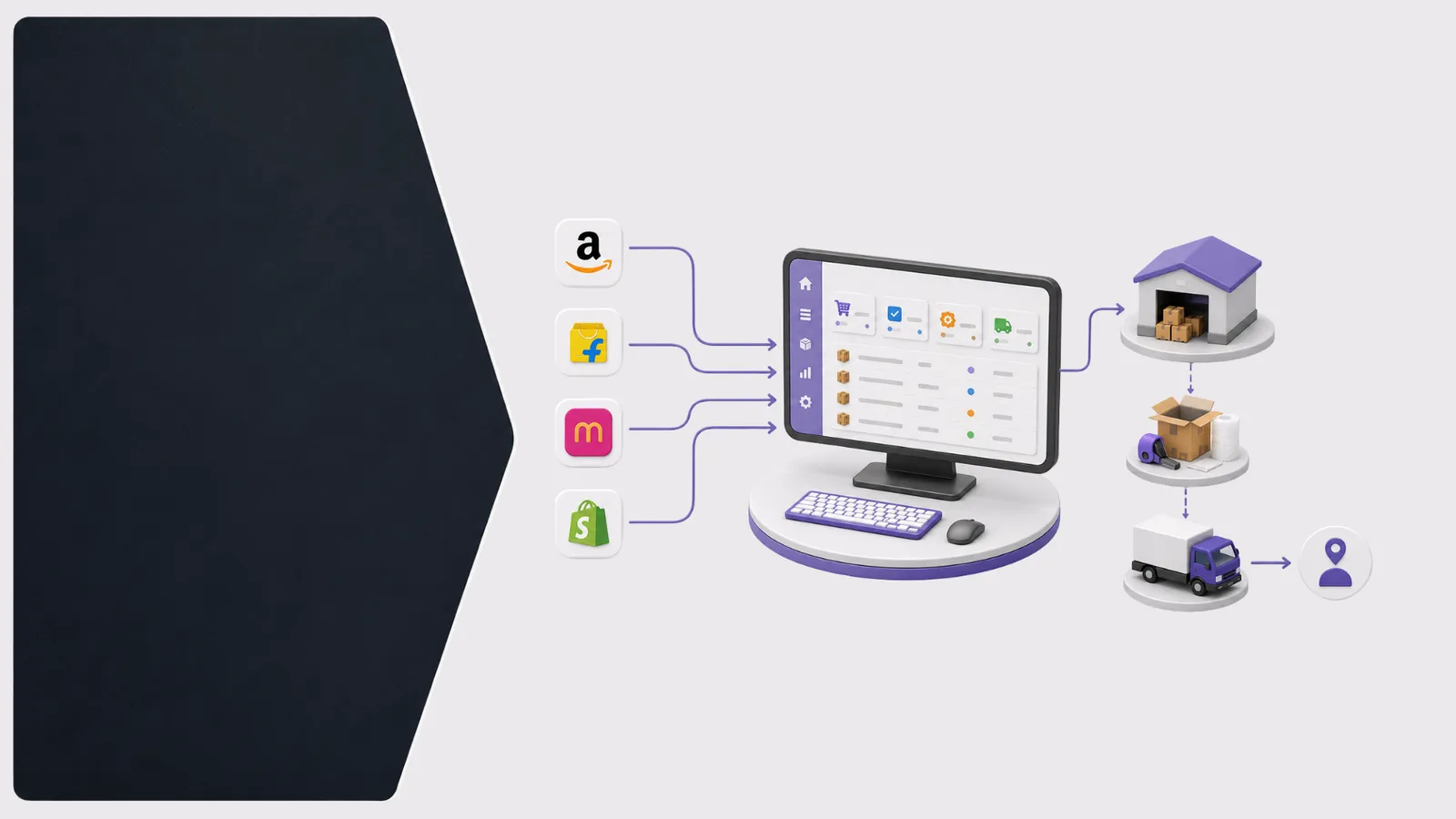
An order management system for ecommerce (OMS) is a centralized platform that helps sellers manage orders and connected business operations across multiple sales channels. Instead of handling every marketplace separately, sellers can use an OMS to coordinate order processing, inventory, fulfillment, returns, and reconciliation through a unified workflow.
For growing ecommerce businesses, order management involves much more than receiving an order. Inventory must remain accurate, orders need to be processed on time, shipments must be prepared correctly, returns need to be tracked, and marketplace payments must be reconciled.
An ecommerce OMS connects these operational activities to give sellers better visibility into their business. It becomes particularly useful for businesses selling across Amazon, Flipkart, Meesho, Myntra, Shopify, AJIO, and other ecommerce channels.
Why Ecommerce Sellers Need an Order Management System
As order volumes and the number of sales channels increase, managing operations manually becomes more complicated. Sellers may face challenges such as:
- Managing orders across multiple marketplaces and ecommerce platforms.
- Keeping inventory quantities synchronized across channels.
- Preventing cancellations caused by stock mismatches.
- Processing orders and preparing shipments on time.
- Coordinating warehouse picking, packing, and dispatch.
- Tracking customer returns and inventory adjustments.
- Reconciling marketplace settlements, deductions, and refunds.
- Monitoring operational performance across channels.
A centralized order management system brings these workflows together and helps teams reduce fragmented processes, improve visibility, and manage daily ecommerce operations more consistently.
Key Features of an Ecommerce Order Management System
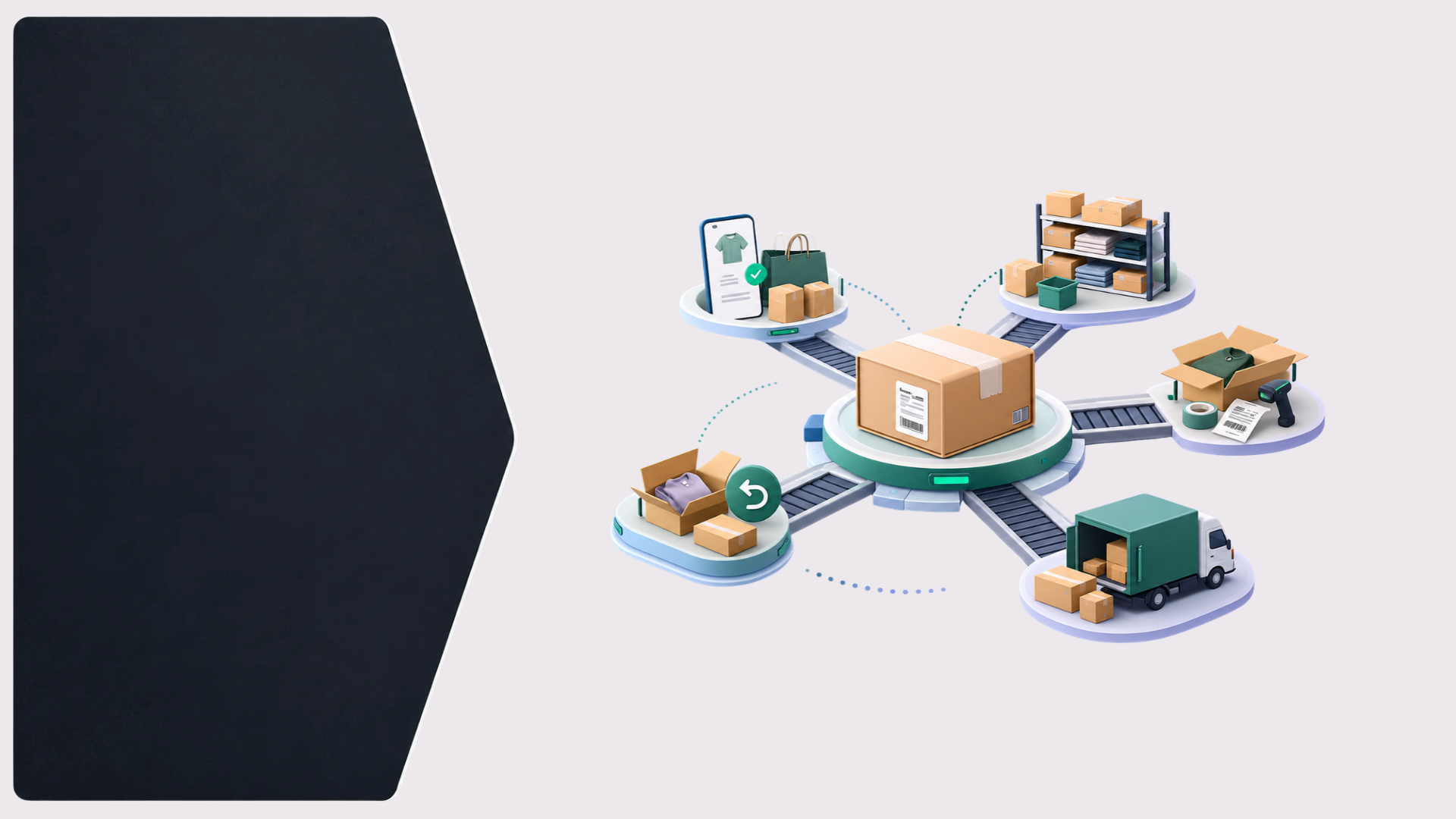
A complete ecommerce OMS supports the order lifecycle from order receipt to fulfillment, returns, and reconciliation.
Order Management
Order management software consolidates orders from connected sales channels into a centralized workflow. Teams can monitor order statuses, identify pending orders, and coordinate processing without repeatedly switching between marketplace panels.
Inventory Management and Synchronization
Inventory synchronization helps maintain consistent stock information across connected marketplaces and warehouses. Accurate inventory visibility can reduce overselling, stock mismatches, and avoidable order cancellations.
Warehouse Management
Warehouse workflows include picking, packing, shipping label generation, dispatch preparation, and stock movement. Connecting order management with warehouse operations helps teams process orders more systematically.
Order Fulfillment and Shipping
Order fulfillment covers the activities required to prepare and dispatch customer orders. Depending on the integrations and configuration, an OMS can help coordinate fulfillment workflows, shipping documentation, and order status updates.
Returns and Return Management
Return management helps sellers track returned orders, inspect received products, update inventory records, and monitor return-related operational issues. Clear return workflows help maintain accurate stock and order information.
Payment and Return Reconciliation
Payment reconciliation compares marketplace settlement information with order records to identify differences in payments, fees, deductions, and refunds. Return reconciliation helps sellers investigate return-related discrepancies and understand their impact on marketplace settlements.
Marketplace Integrations
Marketplace integrations connect supported sales channels to a centralized order management platform. Sellers operating across Amazon, Flipkart, Meesho, Myntra, Shopify, AJIO, and other supported channels can coordinate their operations without treating every marketplace as a completely separate workflow.
Reporting and Analytics
Operational reports help sellers monitor order volumes, inventory discrepancies, cancellations, returns, and reconciliation exceptions. These insights can support better decisions about inventory planning, team allocation, and process improvements.
Ecommerce Order Management Workflow
A structured order management workflow helps sellers coordinate the different stages of an ecommerce order.
Order received: Orders from connected marketplaces enter the centralized order management workflow.
Inventory validation: Available stock is checked to identify inventory discrepancies or potential fulfillment issues.
Order processing: Orders move through the required processing stages based on configured business rules.
Picking and packing: Warehouse teams locate the products, prepare packages, and complete the required packing procedures.
Shipping and dispatch: Shipping labels and dispatch documentation are prepared through supported workflows, and order statuses are updated where integrations allow.
Delivery and completion: Sellers monitor order progress through the available marketplace and logistics updates.
Returns and reconciliation: When returns or settlement discrepancies occur, the relevant operational and financial records can be reviewed and reconciled.
Connecting these stages through an ecommerce OMS helps teams maintain better visibility throughout the order lifecycle.
Multichannel Inventory Management for Ecommerce
Inventory management becomes more challenging when the same products are sold across multiple marketplaces. Stock quantities can become inconsistent when inventory is updated manually or when separate systems maintain different stock records.
These mismatches can lead to overselling, order cancellations, incorrect stock availability, warehouse confusion, and missed sales opportunities.
A centralized inventory management system helps sellers maintain a clearer view of available stock across connected channels. Depending on the platform's synchronization capabilities, stock changes can be reflected across supported marketplaces, helping teams coordinate inventory more accurately.
For multichannel sellers, inventory synchronization is an important part of maintaining reliable order processing as product catalogs and sales volumes grow.
Ecommerce Returns and Payment Reconciliation
Returns and marketplace settlements can affect both operational accuracy and profitability. Sellers need to understand what happened to an order after dispatch, whether returned inventory was received correctly, and whether the corresponding financial records match.
Important areas to monitor include:
- Returned orders and product quantities.
- Inventory received from returned shipments.
- Refunds, marketplace fees, and settlement deductions.
- Differences between order values and settlement records.
- Return-related discrepancies requiring investigation.
- Reconciliation reports for financial review.
Connecting order management, returns, and reconciliation workflows helps sellers investigate discrepancies using more consistent order-level information.
Scaling Ecommerce Operations with an OMS
As an ecommerce business grows from hundreds of orders to thousands, manual workflows can become harder to maintain. Teams may spend increasing amounts of time checking order statuses, correcting inventory, coordinating warehouse activity, and reviewing marketplace settlement reports.
An order management system helps centralize these processes so different teams can work with more consistent operational information.
- Operations teams monitor incoming orders and processing status.
- Warehouse teams coordinate picking, packing, dispatch, and stock movement.
- Inventory teams review stock availability and discrepancies.
- Finance teams investigate payment and return reconciliation differences.
- Management teams review operational reports and identify bottlenecks.
The benefits depend on the quality of integrations, workflow configuration, and how consistently the system is used. The objective is to build processes that remain manageable as order volume and operational complexity increase.
Choosing the Right Order Management Software for Ecommerce
Not every OMS offers the same capabilities. Before choosing an order management system, sellers should evaluate their operational requirements and the features available in each platform.
Consider the following factors:
- Marketplace integrations: Does the system support the channels on which your business sells?
- Inventory synchronization: Can it maintain stock visibility across your connected sales channels?
- Order processing: Does it support the order statuses and workflows your team needs?
- Warehouse operations: Can it support your picking, packing, labeling, and dispatch processes?
- Returns management: Can your team track returns and related inventory adjustments?
- Payment reconciliation: Does it help identify marketplace settlement discrepancies?
- Reporting: Are the operational reports useful for monitoring performance?
- Scalability: Can the system support your expected order volumes and additional sales channels?
- Implementation and support: Are setup, onboarding, and ongoing support suitable for your business?
The right ecommerce OMS should solve your most important operational problems and integrate with your existing workflows rather than simply offer a long list of features.
Ecommerce Order Management with Elitesecom
Elitesecom provides order management and connected ecommerce operations capabilities designed for sellers managing multiple sales channels.
Depending on the selected integrations and configured features, businesses can use Elitesecom to support:
- Centralized multichannel order management.
- Inventory synchronization across connected marketplaces.
- Warehouse, packing, and dispatch workflows.
- Marketplace integrations for supported ecommerce channels.
- Payment and return reconciliation.
- Operational visibility through reports and analytics.
For sellers expanding across marketplaces, a centralized platform can help bring orders, inventory, fulfillment, and reconciliation into a more coordinated workflow.
Pro Tip
Don't evaluate an order management system only by how quickly it imports orders. Look at the complete operational lifecycle, including inventory synchronization, fulfillment, returns, payment reconciliation, integrations, and reporting. These capabilities are essential when managing a growing multichannel ecommerce business.
Key Takeaways
- An ecommerce order management system centralizes orders across connected sales channels.
- Inventory synchronization helps reduce stock mismatches and overselling.
- Automated workflows can reduce repetitive manual order processing.
- Warehouse and fulfillment coordination helps organize picking, packing, and dispatch.
- Returns management supports accurate inventory and order records.
- Payment and return reconciliation helps identify marketplace discrepancies.
- Marketplace integrations simplify multichannel ecommerce operations.
- Reporting helps sellers identify operational bottlenecks and improvement opportunities.
- The right OMS should match your business requirements, integrations, and growth plans.
A well-configured order management system helps ecommerce sellers coordinate daily operations more consistently. By connecting order processing, inventory, fulfillment, returns, and reconciliation, businesses can build a stronger operational foundation for multichannel growth.