Introduction: What Warehouse Management Means for Ecommerce
Warehouse management is the coordinated work of receiving, storing, tracking, picking, packing, and dispatching inventory, then handling it again if an order is returned. For an ecommerce business, these connected warehouse operations help keep stock records accurate and orders moving from checkout to delivery.
Good ecommerce warehouse management supports faster order processing, organized picking and packing, and clear inventory visibility across sales channels. It also gives teams a process for returns, so a returned product is inspected and its status is recorded before it is offered for sale again.
1. Warehouse Management Basics
Warehouse management controls inventory and warehouse activities from the time products arrive until they are dispatched or returned. The exact workflow varies by business, but it commonly includes these stages:
Receiving
Staff receive incoming products, check quantities and condition against purchase or transfer records, record the stock, and move it into the warehouse process.
Putaway and Storage
Products are assigned to suitable storage locations and organized so staff can find and retrieve them. Clear SKU and location records support efficient movement through the warehouse.
Inventory Tracking
Accurate records show what stock is available and where it is located. Inventory tracking should reflect receipts, adjustments, picks, transfers, dispatches, and returns.
Picking and Packing
After an order is received, products are selected from storage. Picked items are checked, packed, labeled, and prepared for dispatch according to the order and shipping requirements.
Dispatch and Returns
Packed orders move to the shipping or delivery process. Returned products need to be received, inspected, recorded, and either restocked or directed to the appropriate return process.
2. Key Warehouse Management Processes
Warehouse efficiency depends on reliable handoffs between inventory and order workflows. Warehouse inventory management keeps stock records organized across SKUs and storage locations, while order processing connects incoming ecommerce orders to work on the warehouse floor.
Consistent picking and packing instructions help teams select the right items, verify them, and prepare complete orders. Stock movement should be recorded as products pass between receiving, storage, picking, packing, dispatch, and returns. When an item comes back, inspection and an accurate status update help prevent unavailable or unsellable stock from appearing as available inventory.
Teams can monitor warehouse performance using operational measures such as order processing time, picking accuracy, packing accuracy, inventory accuracy, order fulfillment time, and return processing time. These measures help identify where a workflow needs attention without assuming a universal benchmark.
3. What Is a Warehouse Management System (WMS)?
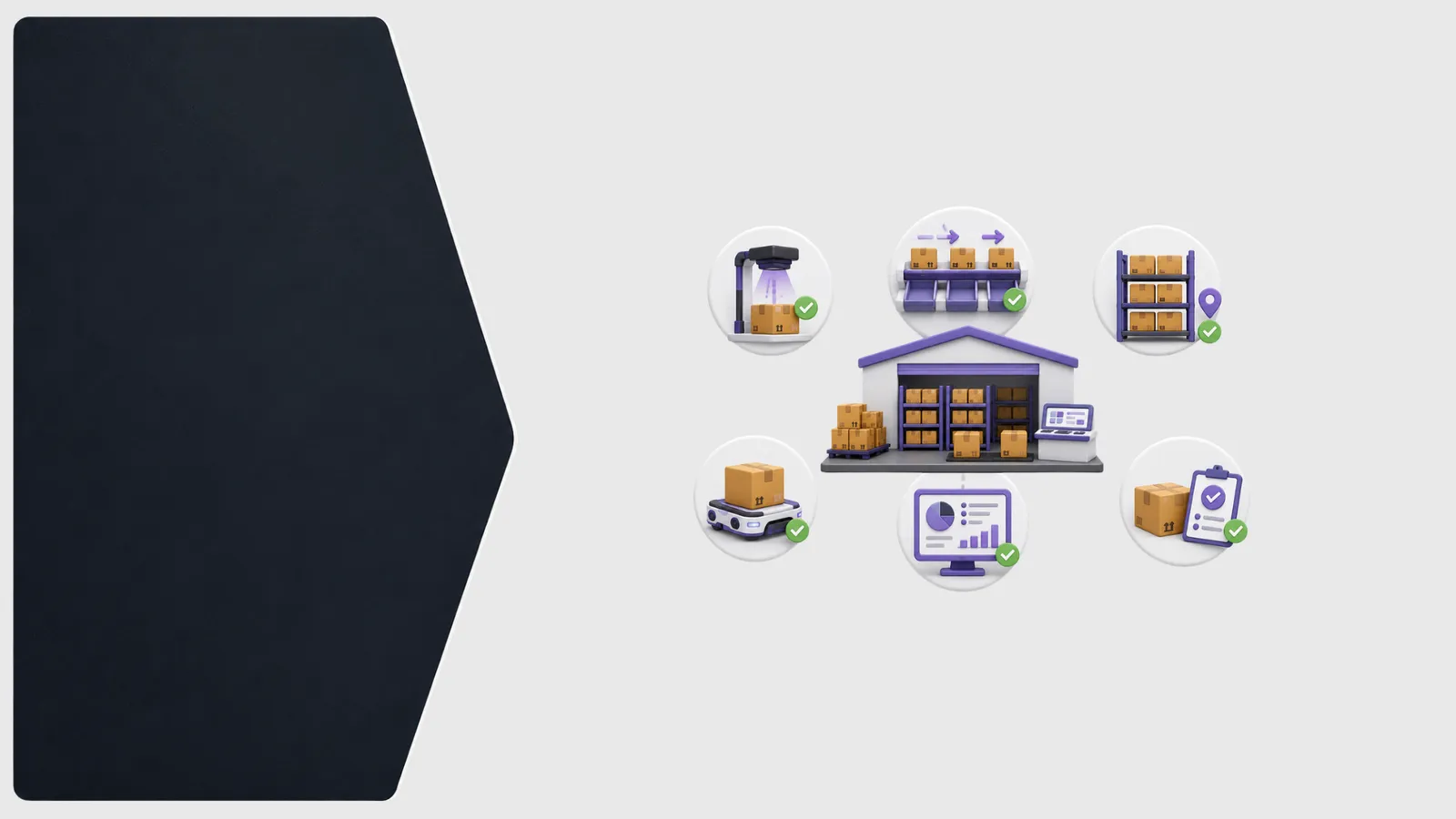
A Warehouse Management System (WMS) is software designed to help businesses manage warehouse activities, inventory movement, storage locations, picking, packing, and fulfillment operations. Depending on the product, its functionality may include inventory tracking, location management, receiving, putaway, picking, packing, dispatch, returns, barcode scanning, or warehouse reporting. Not every WMS offers every capability.
Warehouse management is the business process: the people, rules, and steps used to handle goods. A WMS is software that can support and record those processes. Warehouse management software is most useful when it reflects how a business actually receives, stores, and fulfills stock.
Warehouse Management for Ecommerce
Ecommerce adds complexity because orders can arrive from multiple channels, including Amazon, Flipkart, Meesho, Myntra, AJIO, and Shopify. When the same inventory is sold in several places, multichannel inventory management needs consistent availability across channel listings and warehouse records.
Orders must move efficiently from receipt to picking, packing, and dispatch. If inventory records are inaccurate, a business may show unavailable stock, oversell products, cancel orders, or encounter other fulfillment issues. Returns create more warehouse work: items need inspection and their condition and availability must be reflected correctly in inventory records.
Warehouse Management and Order Management
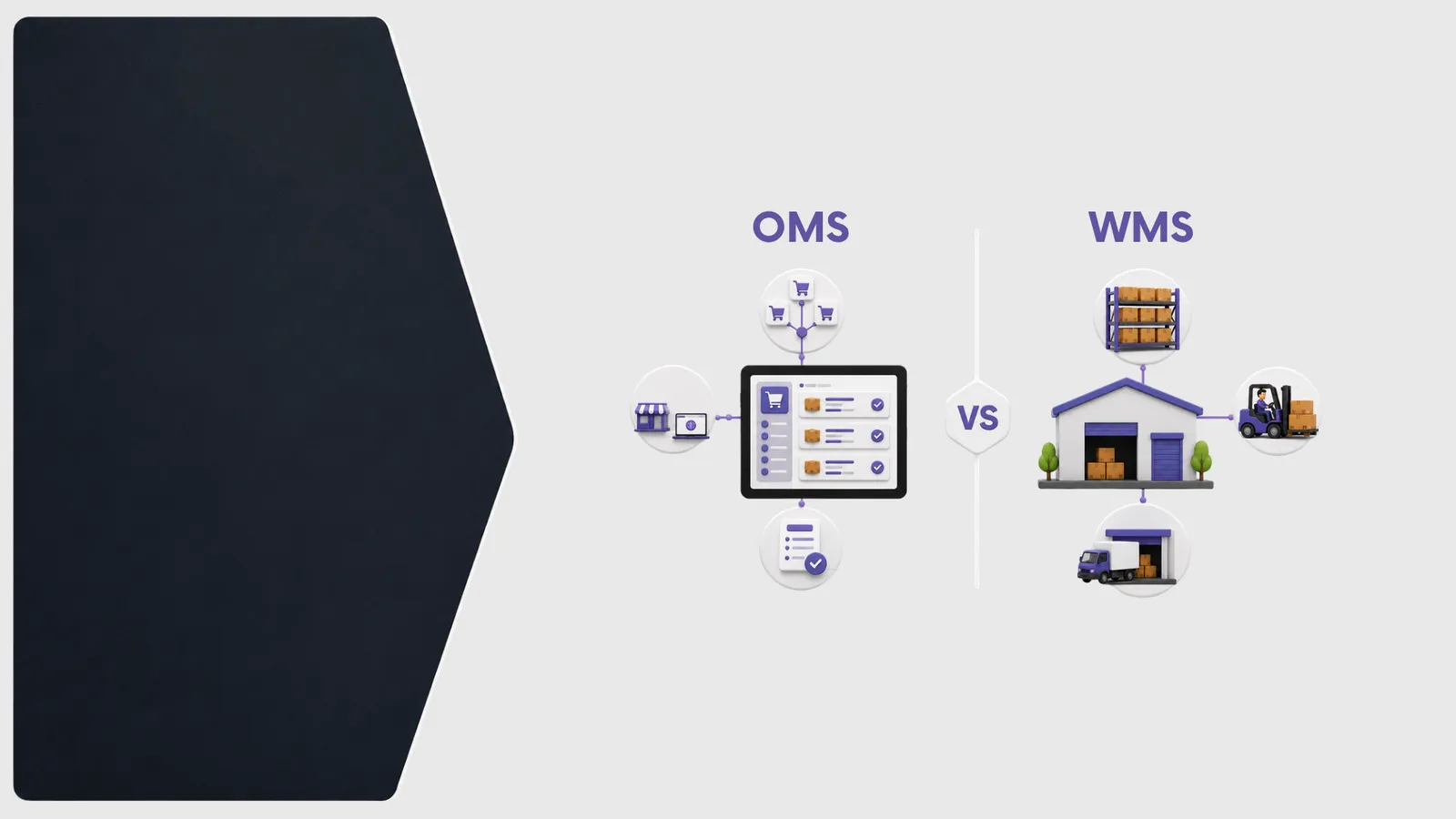
An Order Management System (OMS) coordinates orders across ecommerce channels, while warehouse operations handle the physical movement and fulfillment of inventory. They work together across a shared order journey:
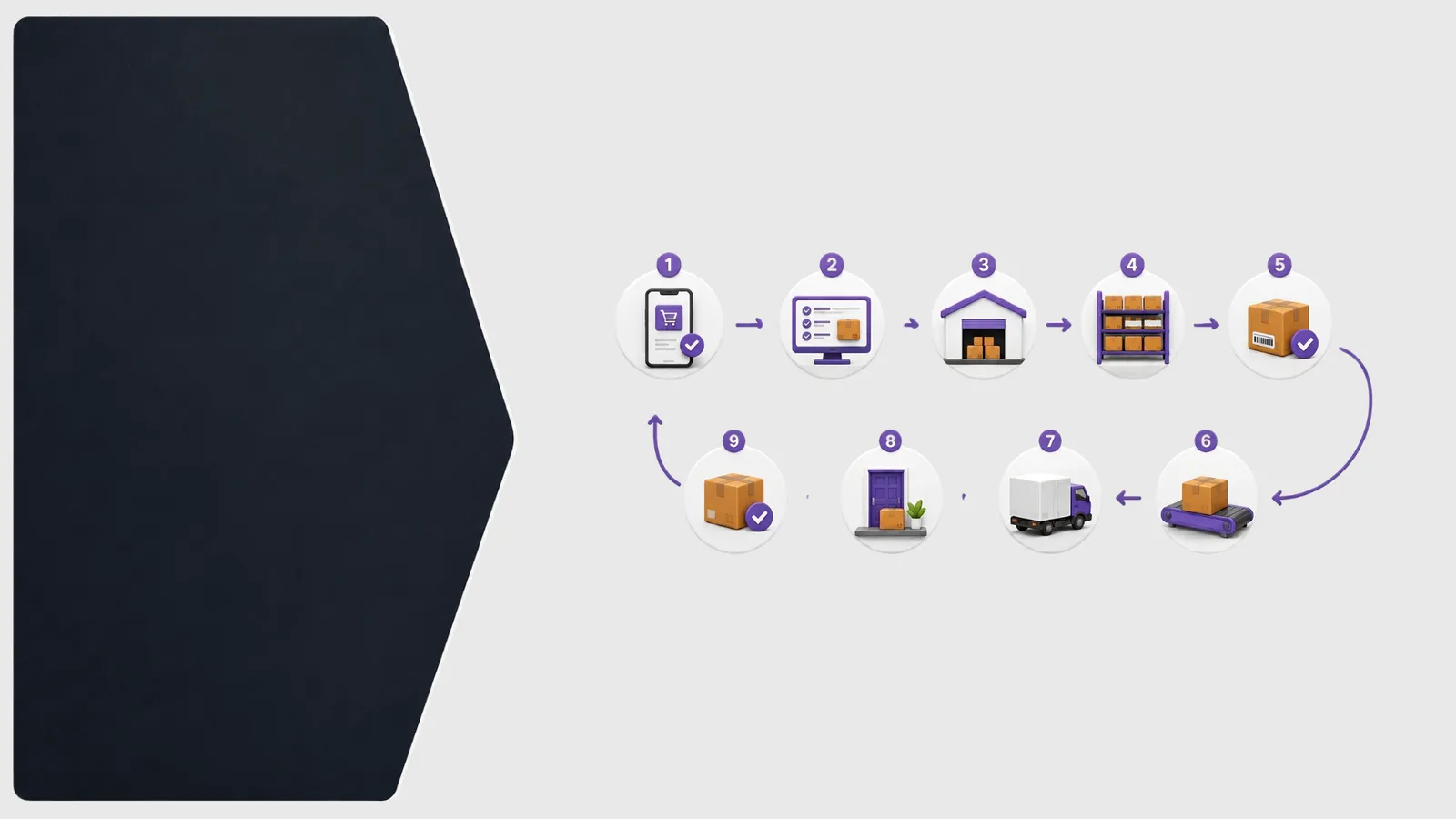
Order Received → Inventory Checked → Order Processed → Picking → Packing → Dispatch → Delivery → Return (if applicable)
Connecting order and warehouse processes can give teams better operational visibility and reduce manual coordination. An OMS does not necessarily perform the full functions of a WMS; the systems may be separate or integrated depending on the business setup.
Benefits of Effective Warehouse Management
Well-organized warehouse management gives ecommerce teams better inventory visibility and accuracy, more orderly day-to-day operations, and clearer coordination between orders and fulfillment. Defined workflows can help teams process orders consistently and reduce picking or packing errors. Structured returns processing and operational reporting also make it easier to understand where work is waiting or records need attention. These foundations help a business plan for growing order volumes without promising a particular result.
How to Improve Warehouse Management
- Standardize processes: Document receiving, storage, picking, packing, dispatch, and returns so teams follow clear workflows.
- Improve inventory accuracy: Reconcile physical stock with system records regularly and investigate differences.
- Use barcode scanning: Where appropriate, scanning can help identify products and reduce manual data-entry errors.
- Organize storage locations: Use a logical SKU and location structure so inventory is easier to find and retrieve.
- Monitor warehouse KPIs: Track inventory and picking accuracy, processing and fulfillment time, and return processing.
- Connect ecommerce operations: Link warehouse inventory and order workflows where the available technology supports it.
- Plan for growth: Review whether processes can handle more SKUs, orders, warehouses, and sales channels.
Choosing Warehouse Management Software
Evaluate warehouse management software against your real workflow. Consider inventory tracking and synchronization, warehouse and location management, receiving, picking and packing, barcode support, order fulfillment, returns, marketplace and ecommerce integrations, reporting, user permissions, and scalability. Check how the system connects with your existing OMS or ecommerce tools.
A long feature list does not guarantee a good fit. Map how products and orders move through your operation, identify the handoffs that need support, and assess software against those requirements.
How Elitesecom Supports Ecommerce Operations
Elitesecom supports ecommerce order and inventory operations through multichannel order management, inventory synchronization, order processing, fulfillment operations, returns management, payment reconciliation, and return reconciliation. These capabilities support the coordination around warehouse workflows; businesses should assess their specific warehouse requirements against the functionality available to them.
Pro Tip
Don't optimize only one warehouse activity. Look at the complete workflow from receiving inventory to final dispatch and returns. A small issue in inventory accuracy, picking, packing, or order processing can affect the entire fulfillment operation.
Key Takeaways
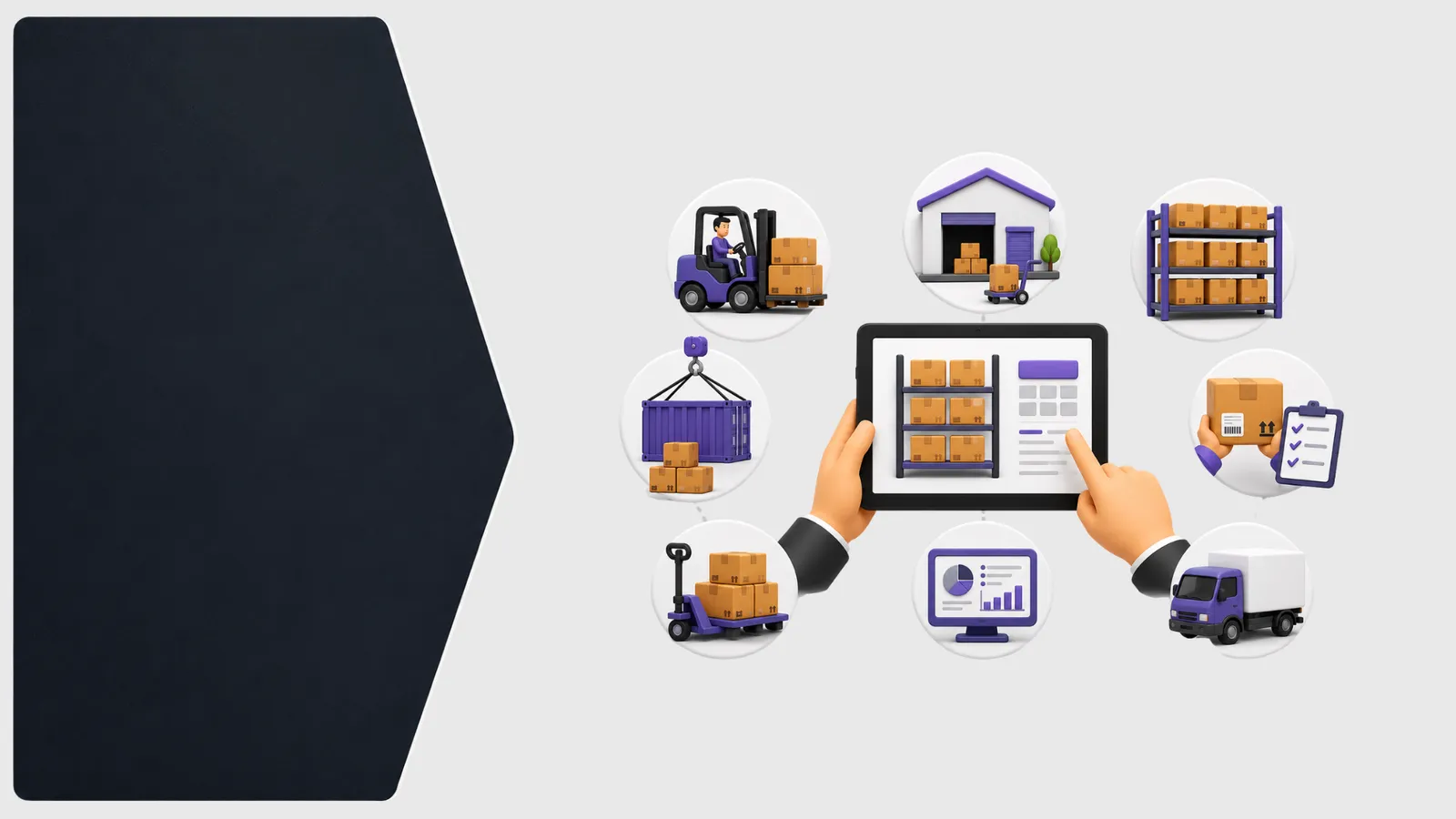
- Warehouse management covers the complete flow of inventory from receiving to storage, picking, packing, dispatch, and returns.
- Accurate inventory tracking is one of the foundations of effective warehouse operations.
- A WMS can help businesses manage warehouse processes, inventory movement, and fulfillment activities.
- Ecommerce warehouses need to coordinate inventory and fulfillment across multiple sales channels.
- Picking, packing, and inventory accuracy directly affect order fulfillment operations.
- Warehouse management and order management work together but are not the same thing.
- Businesses should standardize processes, monitor KPIs, and improve inventory visibility as they scale.
- Warehouse management software should be evaluated based on the business's actual operational requirements.